

A rave isn’t just a dance; it’s an electrifying cultural movement. During a rave, you experience music, unique dance styles, and vibrant community connections. The atmosphere invites you to express yourself freely among people who share similar vibes. Pulsating lights and engaging visuals elevate your experience, making dancing an immersive activity. While the music fuels your energy, substances can enhance that feeling, but they come with risks too. Discover the rich world behind raves and how each element shapes the experience.
Key Takeaways
- A rave is an event characterized by music, dance, and vibrant atmospheres, rather than being a dance style itself.
- Freestyle movement and various dance styles like muzzing and flow dance dominate the dance floor at raves.
- Dance at raves serves as a powerful form of expression and communication among attendees.
- The immersive environment of raves encourages creative movement inspired by music and synchronized light shows.
- While raves involve dancing, they also emphasize community connection and shared experiences beyond just the act of dancing.
The Essence of Rave Movement
When you step into a rave, the essence of the movement hits you immediately, as dancers lose themselves in the rhythm and energy of the music.
Rave movement is all about freestyle expression, where dance styles like muzzing, flow dance, and even headbanging come alive. These spontaneous movements sync with the electrifying beats of electronic dance music, creating a visual feast.
And let’s not forget the magic of group dance! It’s a community experience that turns strangers into dance partners, united by the pulsating sound.
Historical Context of Rave Culture
Rave culture traces its roots back to the late 1980s, evolving from secretive warehouse parties where amplified electronic music and dazzling light shows created an electric atmosphere.
Initially coined in 1950s London to describe bohemian gatherings, the term “rave” transformed over decades, particularly through the Acid House movement that popularized new sounds in Chicago and the UK.
As raves shifted from underground events to massive festivals by the 1990s, they fostered a communal spirit centered on values of peace, love, unity, and respect, despite the challenges they faced.
Origins of Rave Culture
Emerging from the vibrant underground scene of the late 1980s, rave culture has roots deeply intertwined with the evolution of electronic dance music and a community ethos centered on unity and respect.
Born from wild warehouse parties, it transformed the nightlife landscape, especially after the Acid House movement spread from Chicago to the UK and Ibiza.
While attendees danced to pulsating beats, drug use often tagged along, igniting moral panic and law enforcement challenges.
Despite this, raves grew, attracting thousands enthusiastic to lose themselves in the rhythm.
Rave culture isn’t just a party; it’s a celebration of life, connection, and escapism.
Evolution of Rave Events
As rave culture gained momentum through the late 1980s and into the 1990s, the transformation of its events mirrored broader societal shifts in music and nightlife.
What started as underground raves in abandoned buildings morphed into massive festivals, welcoming tens of thousands of dance enthusiasts.
The evolution of rave events brought diverse electronic music genres like drum and bass into the mix, moving beyond just acid house and techno.
Superstar DJs became the rock stars of the dance scene, attracting crowds like moths to a neon flame.
Today’s raves even throw in art and food, making them a feast for all senses!
Dance Styles in Raves
While attending a rave, you’ll quickly notice that the dance styles are as diverse and dynamic as the music pulsating through the venue. Freestyle movement reigns supreme, encouraging you to express your inner creativity.
Rave dance styles burst with diversity, inviting you to unleash your creativity on the vibrant dance floor.
You might spot “muzzing,” where your arms mimic robotic motions—think Transformer meets dance floor. Or try “flow dance,” using hula hoops to create mesmerizing visuals.
Then there’s “wavy flow dance,” adding grace with flowing ribbons. For the adrenaline junkies, headbanging and hardstyle invite loose, puppet-like moves.
Each style reflects the essence of electronic dance music (EDM), fostering connection and pure joy on the dance floor.
The Role of Music in Rave Experiences
Music serves as the heartbeat of a rave, driving the energy and shaping the entire experience for attendees. Rave music, primarily electronic dance music (EDM), features fast tempos and deep bass lines that keep you dancing all night long.
The DJ’s track selection creates a sonic journey, enhancing the party atmosphere of Ibiza. As you immerse yourself in the beats, you’ll find self-expression and emotional release, all while surrounded by dazzling light shows.
This dynamic interplay of sound and visuals crafts an unforgettable, immersive experience, making every dance party feel like a wild adventure where creativity knows no bounds.
Community and Connection at Rave Events
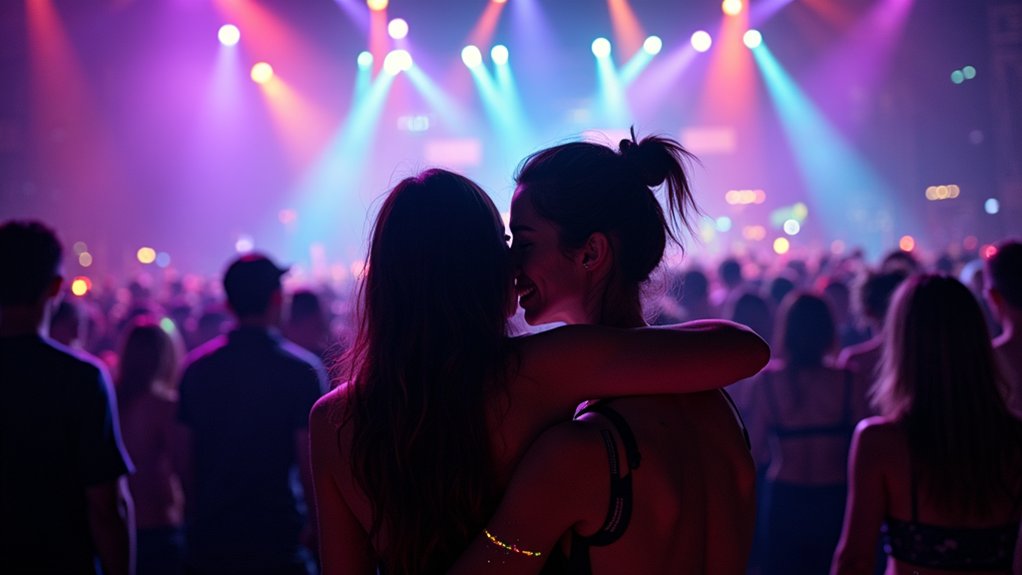
Rave events create an unparalleled environment where community and connection thrive, drawing participants from diverse backgrounds into a shared experience of joy and liberation.
In this vibrant rave culture, you’ll find friendships blossoming on the dance floor, fueled by the PLUR philosophy—Peace, Love, Unity, Respect.
As you dance until sunrise, the collective rhythm fosters lasting memories and strengthens bonds among ravers.
The atmosphere encourages social interaction, making it easy to connect with fellow party-goers, regardless of where they come from.
Ultimately, these shared experiences transform strangers into a tight-knit community, proving that the rave spirit is truly infectious!
Fashion Trends Influencing Dance
As you step into the electrifying world of rave events, the fashion surrounding these gatherings becomes an essential aspect of the dance experience.
Rave fashion, with its vibrant colors and DIY flair, offers you the freedom of movement and a canvas for self-expression. Costume-like outfits and LED accessories not only enhance your visual stimulation but also sync with the pulsating beats, making your dance feel alive.
Plus, the communal aspect of rave culture means that shared styles foster a collective identity, igniting unique group dance moves.
The Impact of Light Shows on Dance
When you step onto the dance floor at a rave, the light show instantly transforms your experience, engaging your senses and inspiring movement.
The rhythm of the music harmonizes with the pulsating lights, creating an emotional connection that drives you to dance more freely.
As colors shift and intensity builds, you find yourself immersed in a mesmerizing environment that heightens your energy and motivation to keep moving.
Visual Stimulation and Movement
Amid the pulsating rhythms of electronic music, the mesmerizing light shows at raves transform the dance floor into a vibrant tapestry of colors and movement.
These dazzling displays of lasers and LED effects create a sensory overload that heightens your visual stimulation, making you feel alive. As the lights sync with the beats, you can’t help but let loose, enhancing the dance atmosphere and inspiring expressive dancing.
Techniques like gloving and glowsticking not only amp up the visual appeal but also invite creativity in your moves.
Rhythm Enhancement Through Lighting
While you dance under the vibrant glow of synchronized lights, the impact of these visual spectacles on your rhythm becomes undeniable.
Light shows, with their dazzling lasers and colorful LEDs, create an immersive atmosphere that elevates your energetic dance movements. As the visuals sync with the beats, you might find yourself grooving more rhythmically, almost as if the lights are leading your feet.
These visual effects not only enhance your perception of tempo but also keep you engaged longer, ensuring you don’t just dance—you dance like a glowing star!
Emotional Connection to Environment
As you step into the pulsating domain of a rave, the interplay of light and sound creates an emotional connection that’s hard to ignore.
Those vibrant colors and dynamic patterns don’t just dazzle; they immerse you in a euphoric atmosphere, amplifying your dance moves.
Synchronized lighting doesn’t just set the mood—it dictates your rhythm and releases your creative expression.
With glowsticks and LED accessories adding flair, you join in collective joy, feeling united with fellow dancers.
This sensory overload can even alter your consciousness, deepening your bond with the environment and everyone sharing the experience.
Get ready to lose yourself!
Drug Use and Its Effects on Rave Dancing

When participants step into the pulsating world of raves, the allure of heightened sensory experiences often leads to the use of drugs like MDMA.
Sure, it can make you feel invincible on the dance floor, but don’t forget the risks—dehydration and fatigue can sneak up on you faster than that last beat drop.
You might find yourself jaw-clenching and grinding your teeth, so pack a pacifier if you can’t resist the urge to dance.
Remember, while the vibe is generally safe, drug use can still leave you feeling anxious and exhausted long after the last track fades.
Dance wisely!


